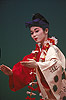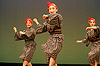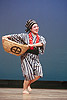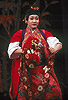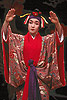
This dance was created in the Ryukyu Kingdom era. The theme of this dance expresses the feeding of satisfaction and the contentment of making love on secret.
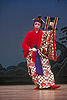
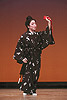
The literal meaning of KASHIKAKI is, labor to make yarn for weaving. KASHI stands for a tool for spinning. This dance is one of the wellknown Okinawan classic dances, because of its sophisticated movements and the universality of the theme: A wife at home making clothes for her husband.
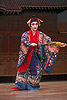
The desire to see a plentiful harvest each year was one shared by every Ryukyuan from the king down to the lowliest peasant. The dancer of Nnimazin performs holding a bunch of rice ears, which were considered to symbolize the prosperity(yugafu) that was the concomittant of a rich harvest.
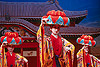
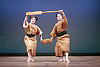
The costume of this dance consists of a gorgeous Kimono called a Bingata, and a large flower-shaped hat. The dancers clap bamboo pieces together thoroghout the dance.
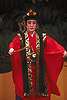
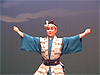
This dance belongs to the category of wakashuodori(boys dances), which were originally performed by boys of about fourteen or fifteen prior to the comming-of-age ceremony.
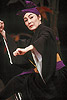
Takaderamanzai / 04:16
This dance originated from a Kumi Odori, or a theatrical
drama called Manzai Tichiuchi. This dance tells the story of two brothers
who accomplished their mission to avenge their father's death.
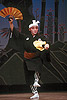
After Ryukyu had come under the domination of the southernmost Kyushu province of Satsuma in 1609, members of the Ryukyuan nobility were obliged to travel frequently to Kagoshima, the Satsuma capital, and to the Japanese capital of Edo on political and offcial business. The text of Nubui kuduchi describes the journey between Shuri, starting at the Kannondo temple, culminating at the end of the long sea voyage in arrival at Kagoshima. The musical form is that of the kuduchi, a Japanese idiom charcterized by strophic presentation of an extended text.
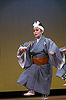
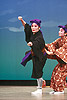
Zei is a little flag-like dancing tool held in the hands while dancing. A movement is made to symbolize a command given by a Samurai officer. This dance shows the a brave warrior's spirit going to the battlefield.
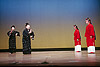
The meaning of the title of this song is "An Ugly Girl." In it there are two pairs of girls: one ugly and the other beautiful. The ugly girls want to join the beatiful girls in play, but the beatiful girls refuse because the other are so ugly and dirty. The agly girls feel disappointed and retunes backstage while making some comical movements, such as swinging and throwing their buttocks.